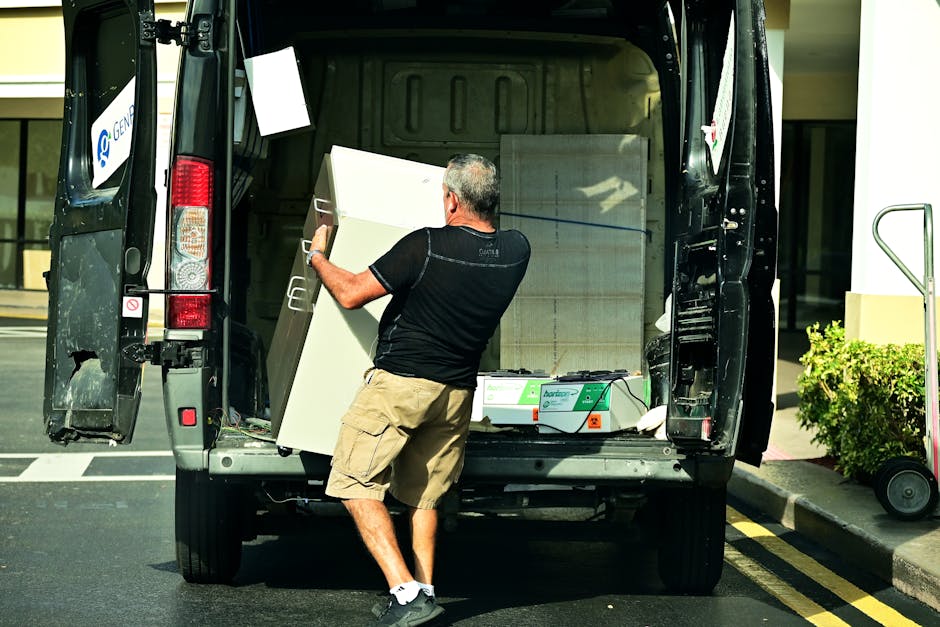
Business removals West Kensington office relocations made simple
Moving a business is one of those jobs that looks straightforward on paper and then suddenly becomes a maze of labels, cables, keys, lifts, deadlines, and "where did we put the printer lead?" moments. If you are planning Business removals West Kensington office relocations made simple, the real goal is not just shifting desks from one place to another. It is keeping work moving, protecting equipment, reducing downtime, and making sure staff can settle into the new space without chaos.
That is especially true in West Kensington, where office access, parking, shared buildings, and narrow streets can all shape how a move plays out. The good news? With the right approach, a commercial move does not have to feel overwhelming. In this guide, you will find a practical, plain-English breakdown of how office relocations work, what to plan for, what to avoid, and how to keep the whole thing calm enough to breathe through. Truth be told, that matters more than most people admit.
Why Business removals West Kensington office relocations made simple Matters
A business move is not just a logistics task. It affects client service, staff productivity, equipment safety, and even your reputation. If an office relocation drags on, people lose time answering calls, finding files, reconnecting laptops, or waiting for furniture to arrive. That can turn a normal working week into a long one, and nobody wants that.
In West Kensington, a well-planned move matters even more because commercial properties often have practical constraints: timed loading, mixed-use buildings, shared corridors, limited lift availability, and the usual London reality of traffic that seems to have a mind of its own. A clean, coordinated move reduces disruption and helps you switch sites without feeling like you are running two offices at once.
It also protects the details that are easy to overlook. Secure document handling, careful packing of IT equipment, and sensible sequencing for staff desks all make a real difference. One misplaced cable tray can cost more time than you would expect. A well-run office move does the boring stuff properly, which is honestly the whole trick.
If you are comparing services, it can help to look at broader support options such as commercial moves, office removals, and office relocation services so you can match the level of support to the size of the job.
How Business removals West Kensington office relocations made simple Works
Most office relocations follow a fairly clear pattern, even if every business has its own quirks. The process usually starts with a survey or discussion about what is moving, where it is going, and how much help you need. From there, the move is planned around access, packing, vehicle size, timing, and any fragile or high-value items.
In practice, a good commercial move includes four connected parts:
- Planning: mapping the move, identifying risks, assigning responsibilities, and agreeing timing.
- Packing: boxing files, wrapping furniture, protecting screens, and labelling everything clearly.
- Transport: loading items safely into the right vehicle and moving them efficiently.
- Set-up: unloading, placing items in the correct rooms, and helping the new office become workable fast.
The best relocations are the ones where every stage feels connected. Packing should reflect the floor plan. The vehicle choice should reflect the load size. The sequence of unloading should match how staff actually use the office. Nothing fancy. Just sensible.
For smaller or more flexible moves, a man and van style service may be enough. For larger office setups, a stronger logistics setup through movers, a removal company, or a full removal services package may be the smarter fit.
One thing people often underestimate is access time. If the building has a narrow entrance, a shared loading zone, or a lift booking slot, those details shape the whole day. A move that looks simple at 10 a.m. can become very different by 11:30 if the lift is busy and the van is waiting outside. That's London for you.
Key Benefits and Practical Advantages
The main benefit of a well-managed office move is reduced downtime. But there are several other practical gains that often matter just as much.
- Less disruption for staff: clear packing and good sequencing mean people can find what they need sooner.
- Better protection for equipment: monitors, servers, chairs, and archive materials are handled with care.
- Improved coordination: departments can move in stages rather than all at once, which is often easier.
- Lower stress: when everyone knows what happens next, the move feels manageable.
- Cleaner arrival at the new premises: labelled crates and planned placement save hours.
There is also a real financial advantage in avoiding mistakes. Damaged chairs, missing files, and unplanned overtime can add cost quickly. To be fair, the most expensive move is not always the biggest one; it is often the one that was rushed.
If your office is being cleared or downsized, you may also need help with redundant furniture or leftover stock. In that case, services like furniture pick up can make the final stage much simpler, especially if you are trying to leave the old space tidy and on schedule.
Expert summary: the simplest office relocations are not the ones with the fewest boxes. They are the ones with the clearest plan, the best labels, and the fewest surprises on moving day.
Who This Is For and When It Makes Sense
This kind of service is suitable for a wide range of businesses, not just large corporate offices. In fact, many of the most complicated relocations belong to smaller organisations that are trying to move quickly while staying open.
It makes sense for:
- start-ups moving into their first proper office
- growing teams that have outgrown a shared workspace
- consultancies, agencies, and professional firms with lots of IT kit
- medical, design, or admin teams with sensitive files or specialist furniture
- businesses consolidating two sites into one
- companies relocating within West Kensington or across nearby parts of London
If your move is very small, something like man with van support may be enough. If the relocation involves multiple floors, repeated trips, or a tight deadline, then more structured help is usually worth it.
There are also times when office relocation support is needed even if you are not moving far. A short move across town can still be complicated if the new office is not ready, the old office must be cleared by a certain time, or key staff need to be operational the next morning. Distance is not the only thing that creates pressure. Timing does too.
Step-by-Step Guidance
If you want the move to feel organised, follow a simple sequence. You do not need to make it complicated. In fact, the less complicated, the better.
- Define the scope. List everything that needs to move: desks, chairs, computers, filing cabinets, small items, and any special equipment.
- Set a realistic schedule. Choose moving dates that fit around trading hours, staff availability, and building access.
- Audit the new site. Check entrances, lifts, parking, room layout, power points, and any restrictions before moving day.
- Label by destination. Use clear room names, department labels, or desk numbers so items land in the right place first time.
- Protect the fragile stuff. Wrap screens, secure drawers, and use proper packing materials for sensitive items.
- Brief staff early. Tell everyone what they need to pack, when they need to be ready, and who to speak to with questions.
- Move in the right order. Start with bulky items and non-essential storage, then follow with IT, files, and final desk items.
- Check the final handover. Make sure both sites are left tidy, with no forgotten boxes, chargers, or bits of kit tucked behind radiators. It happens more than people admit.
For many teams, packing support is the part that makes the difference. Services like packing and unpacking services can save a huge amount of time, especially if your staff are already stretched.
A sensible approach is to pack non-essential items first, then the workstations that can be taken offline, and finally anything you still need right up to the move. That sequence is boring, yes, but boring is good here. Boring keeps the day running.
Expert Tips for Better Results
Over time, the same few habits consistently make office relocations smoother. These are the things that separate a decent move from a genuinely calm one.
- Create a move owner: one person should have the final say on timing, packing rules, and questions. Too many cooks, and all that.
- Use a simple colour system: one colour per department or floor works well and avoids endless label reading.
- Keep critical items separate: laptops, chargers, access cards, and the first-day stationery should travel together.
- Book access in advance: if the building needs lift reservations or loading permission, deal with that early.
- Move in phases if needed: a staged relocation can reduce pressure and let operations continue.
- Take photos before disconnecting: especially useful for desks, monitor setups, and cable-heavy workstations.
Small things matter. A box labelled "files" is not nearly as helpful as one labelled "Finance - current month - new office, room 3". The latter saves time and a bit of grumbling. That matters on move day, trust me.
You should also think about what happens after the move. If the old office needs clearing, disposal planning, or recycling support, choosing a provider that understands recycling and sustainability can help you handle unwanted items more responsibly.
Common Mistakes to Avoid
Even well-run businesses can trip over the same issues. The good news is that most of them are avoidable if you spot them early.
- Leaving packing too late: the fastest way to create confusion is to box everything the night before.
- Underestimating access issues: a lift, a parking bay, or a narrow corridor can change the schedule completely.
- Not backing up digital files: always protect data before disconnecting systems.
- Mixing departments: if boxes are unlabeled, the unpacking stage becomes slow and awkward.
- Choosing a vehicle too small: too many trips can cost more time than a slightly larger vehicle would have done.
- Forgetting the first-day essentials: kettle, bins, extension leads, access fobs, and printer supplies are often forgotten until needed.
Another common slip is assuming everyone knows what to do. They usually do not, not in detail. Even a very experienced team benefits from a short written move brief. Keep it simple. Clear. Human. The kind of document someone can skim with a coffee in one hand.
If you are unsure about handling the move safely, it is worth checking the provider's health and safety policy and insurance and safety information before booking. That is not overcautious; it is sensible business practice.
Tools, Resources and Recommendations
You do not need a huge toolkit to manage an office move well, but a few practical items make the process much easier.
- labels or coloured tape for rooms and departments
- inventory sheets for computers, furniture, and archive boxes
- asset tags for higher-value IT equipment
- protective blankets, wraps, and sturdy cartons
- a shared checklist for staff tasks and deadlines
- basic floor plans for both the old and new office
For many small and medium-sized businesses, the best results come from pairing practical packing help with the right vehicle. A moving van or removal van may suit local relocations, while bigger moves may need a moving truck or removal truck hire.
If you are searching broadly, pages such as removals near me, removals, and removal company can help you compare what is available and decide whether you need a small, flexible team or a more structured commercial setup.
Sometimes the right recommendation is simply to keep the job tight. If you can move after hours, use clear access points, and have the receiving office ready, the whole thing gets easier. Not glamorous, but practical. Which is the point.
Law, Compliance, Standards, and Best Practice
Office relocations can touch several areas of business responsibility, even if they are not heavily regulated in the way some specialist industries are. The main thing is to act carefully and follow normal UK business standards around health and safety, insurance, data handling, and building access.
In plain terms, that means:
- protecting staff and contractors from avoidable lifting or trip hazards
- making sure equipment is handled appropriately
- respecting building rules on loading, noise, and access times
- keeping sensitive documents secure during transit
- checking that cover and liabilities are clear before the move begins
If your office stores confidential files, client paperwork, or devices containing business data, treat those items with extra care. Good practice is to separate them from general furniture and ensure only authorised people handle them. That is not just neatness; it is basic professional discipline.
It is also wise to review the mover's terms before work begins. The terms and conditions page can help clarify expectations around timing, responsibilities, and the booking process, while payment and security is useful if you want to understand how transactions are handled.
For businesses with values-led policies, you may also care about the provider's wider standards. Pages such as about us and modern slavery statement can offer reassurance about the organisation behind the service, while privacy policy is relevant if you are sharing contact details or operational information.
Options, Methods, or Comparison Table
Different office moves need different levels of support. A quick comparison makes the choice a bit easier.
| Approach | Best for | Main advantages | Things to watch |
|---|---|---|---|
| Man and van | Small offices, short local moves, light loads | Flexible, simple, often quicker to arrange | Limited capacity for larger furniture or multiple trips |
| Removal van | Medium-sized office relocations | Better for mixed loads and organised transport | May still need help with packing or dismantling |
| Moving truck | Larger offices or heavier equipment | More space, fewer journeys, better for bulk moves | Needs clearer access planning and loading space |
| Full removal services | Busy teams, tight deadlines, complex relocations | More coordination, less stress for staff | Usually the most involved option to plan properly |
There is no single best option for every business. A start-up moving ten desks does not need the same setup as a company with filing rooms, reception furniture, and a stack of monitors that look like they breed overnight. The right choice is the one that fits the size and pace of the move.
If you want a broader overview of service types, looking at man with a van, removal van, and removal services can help you compare options without overcommitting too early.
Case Study or Real-World Example
Here is a realistic example. A small professional office in West Kensington needs to move from a shared building into a nearby self-contained workspace. The team has a handful of desks, multiple laptops, a reception unit, some filing cabinets, and a few awkward items like monitors, printer stands, and office plants that everyone insists on keeping. Of course they do.
They plan the move in stages. Non-essential storage is packed first. Staff label their own desks. The IT equipment is separated and boxed carefully. The movers arrive with enough vehicle space to take the main load in one go, which means there is no endless back-and-forth. The old site is cleared and checked before handover, and the new office is set up by room so the team can start the next morning with minimal fuss.
What made the difference? Not speed, really. It was the sequence. Everything was prepared in the right order, and the handover was treated like part of the job rather than an afterthought. That is where a good office move feels almost calm. Almost.
For similar jobs, businesses often prefer a coordinated service rather than piecing things together themselves. A mixture of office removals and packing and unpacking services can be a strong fit when time and clarity matter most.
Practical Checklist
Use this checklist before moving day. It is intentionally simple, because complicated checklists are the ones people stop reading halfway through.
- Confirm the move date and access times.
- Check parking, lift use, and loading arrangements.
- Make a full inventory of items moving.
- Back up data and secure sensitive documents.
- Label boxes by department, desk, or room.
- Separate essential first-day items from general stock.
- Book the right vehicle size for the volume of goods.
- Confirm any dismantling or reassembly needs.
- Tell staff what to pack and what to leave.
- Arrange disposal or reuse for unwanted furniture.
- Check insurance, safety, and terms before the move.
- Inspect both sites after unloading.
A move is far easier when the office is not trying to invent the plan on the day. If everyone knows the sequence, the whole thing flows better. Simple, yes, but genuinely effective.
Get a free quote today and see how much you can save.
Conclusion
Business removals do not have to be disruptive or stressful. With the right planning, the right vehicle, and a clear sequence for packing and delivery, Business removals West Kensington office relocations made simple becomes more than a phrase. It becomes a realistic approach to moving your business without derailing the week.
The essentials are straightforward: plan early, label well, protect the important stuff, and choose the level of support that matches your move. Whether you need a small local solution or a more complete office relocation setup, the best outcome usually comes from keeping things practical and not trying to improvise at the last minute. There is enough chaos in business already, let's face it.
If you are moving soon, take a breath, make the list, and start with the first sensible step. The rest tends to fall into place once the plan is clear. And that's a relief, honestly.
Frequently Asked Questions
What is included in a business removals service in West Kensington?
It usually includes planning, loading, transport, and unloading. Depending on the provider, it may also include packing support, furniture handling, and help setting items into the right rooms at the new office.
How far in advance should I book an office relocation?
As early as possible. Even a local move benefits from advance planning because access times, vehicle availability, and staff coordination all need time to line up properly.
Can a small office use a man and van service?
Yes, if the move is light, local, and not too complex. A smaller team may be enough for a compact office with limited furniture and straightforward access.
What is the best way to move IT equipment safely?
Back up data first, unplug carefully, and pack equipment in a way that protects screens, cables, and accessories. It helps to keep all parts of each workstation together so nothing goes missing.
Do office removals include packing and unpacking?
Sometimes, but not always. Some businesses prefer full support, while others only need transport. If packing is the hard part, a dedicated packing service can save a lot of time.
How can I reduce downtime during a business move?
Move in phases, label everything clearly, assign one move lead, and keep essential items separate so staff can resume work quickly after arrival.
What size vehicle do I need for an office move?
That depends on the number of desks, boxes, and bulky items. A removal van suits many medium moves, while larger offices may need a moving truck for fewer trips.
What should I do with unwanted office furniture?
Decide early whether it will be reused, donated, recycled, or removed. If you need help clearing items, furniture collection support can make the handover much tidier.
Is West Kensington difficult for office removals?
It can be manageable, but access, parking, and building rules need attention. Like many London areas, the move goes more smoothly when those practical details are checked first.
How do I choose between removal companies?
Look at the level of support offered, how clearly they explain the process, and whether they seem to understand commercial moves rather than only household jobs. A business move needs a bit more organisation.
Are there safety or insurance checks I should ask about?
Yes. It is sensible to ask about safety procedures, insurance cover, and how fragile or high-value items are handled. That kind of clarity helps avoid problems later.
Can office removals happen outside working hours?
Often, yes. Many businesses choose evenings or quieter periods to reduce interruption. The main thing is making sure the building access and transport plan support that timing.